

Source: Rwanda News Agency (Translated)
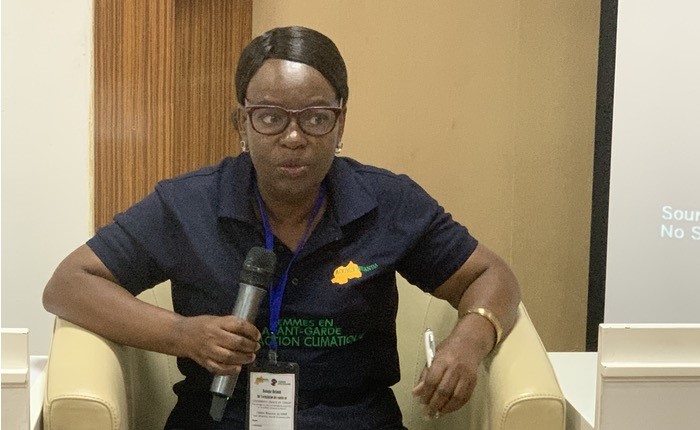
The Rwanda Environment Management Authority (REMA) will draw inspiration from the FACE Project (Feminists for Climate and Environment Alternatives) implemented by ACORD/Rwanda (Association for Cooperation, Research and Development) to train more women to combat the impact of climate change (CC), according to Ms. Olive Mukandahiro, Environment Specialist at REMA.
“The Environment Agency (REMA) has many projects focused on environmental protection and combating the impact of climate change. All institutions working in this sector collaborate by sharing best practices. But the key is to empower farmers to adopt these best practices for combating climate change. In their villages, farmers need to be approached and encouraged to participate in group discussions about the best approach and the sharing of knowledge, even traditional knowledge, which has always proven effective. Sometimes farmers are unaware of weather reports broadcast on the radio. But by staying connected with their groups, each farmer gains a stronger understanding of what needs to be done. REMA will remain in contact with those who implemented the FACE Project to learn from their best practices and disseminate them,” noted Ms. Olive Mukandahiro
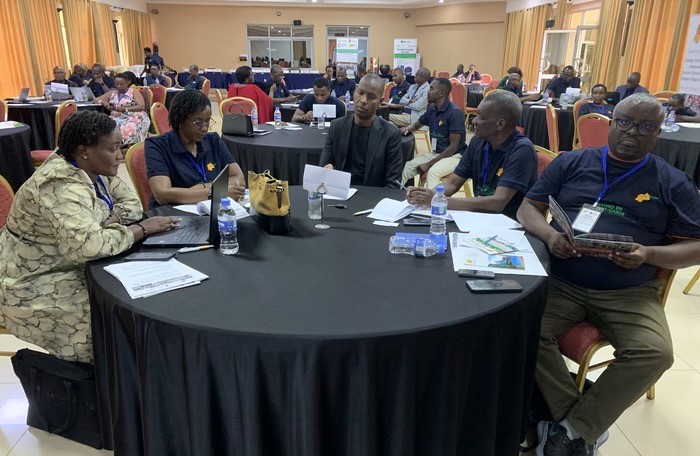
She made these remarks during the closing ceremony of the FACE Project, which also featured a presentation of its achievements. FACE Coordinator François Munyentwari noted that women are more exposed to the impact of climate change than men. This is why the FACE Project empowered them to find sustainable solutions within themselves.
He noted that local officials reporting on climate change-related damage and deaths are urged to specify whether a victim is male or female. This helps confirm that the number of women affected by climate change is indeed higher than that of men.
The other important aspect is that climate change exacerbates tensions and violence against women. And this needs to be emphasized at the global level, according to UN Women reports.
In the case of Rwanda, specifically, testimonies from men and women in Nyarugururu, Munini sector, near Nshili, reveal women who collect charcoal and obtain it in exchange for sex. This is detrimental to household stability and community peace. The testimony of the husband of a woman who was a victim of such abuse is alarming and demonstrates the extent to which climate change threatens the stability of communities that suffer its profound consequences.
The FACE Project intervened to alert the authorities and provide various forms of support to affected households. It distributed water tanks and had others built. It provided stoves, or “Imbabura,” which consume less charcoal, or “Rondereza.” It brought together women who dug erosion control ditches to prevent soil from being washed away to the bottom of the hills. Grasses and reeds for livestock were planted along these ditches. The water was retained, making the soil more productive. Trees were planted and protected as they grew on the hills. The women ensured that their roots were not cut, as had happened previously. This work was made possible thanks to the participation of men who changed their perspective and began collaborating with their wives to strengthen household livelihoods. This is what is called positive masculinity or the man’s contribution to supporting the woman’s effort to build the home.
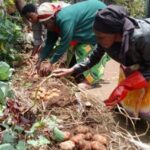
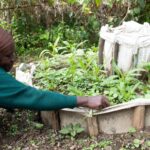
The FACE Project also provided livestock to the women to enable them to obtain organic manure and develop compost using group methods. The FACE Project addressed nutritional needs by establishing kitchen gardens and planting fruit trees. This knowledge was imparted to the women, who carried out these tasks in collaboration with men.
“When a man agrees to work with a woman to do household chores: cooking food, carrying herbs and firewood, drawing water, the woman is empowered and gains time to devote to other things. She gets less tired and her health improves,” testifies a participant in the FACE Project workshop.
State-led development of the marshes deprived women of the fields that provided them with crops.
In Kigali, a large-scale project is underway to develop the capital’s marshes into tourist attractions. The reality is that the women who cultivated these marshes have lost their jobs and crops, resulting in hunger and loss of income.
State officials argue that the marshes were infested with disease and that it was essential to drain them. Women found employment in this endeavor. Initially, they worked as assistant masons, then as masons themselves. And today, a woman with masonry skills is hired on the same basis as a man, without discrimination.
Another important contribution of the FACE Project in the Nyamagabe district, particularly in Kitabi, is that the woman who was once a potter is no longer marginalized. She lives with other Rwandans in the same village, and the children attend the same school.
“I am lent clothes. We sit together with other women. We eat together. We are no longer victims of the stigma of being Twa women. We have the same rights as any Rwandan. I feel free of complexes,” testifies a woman who thanks the FACE Project.
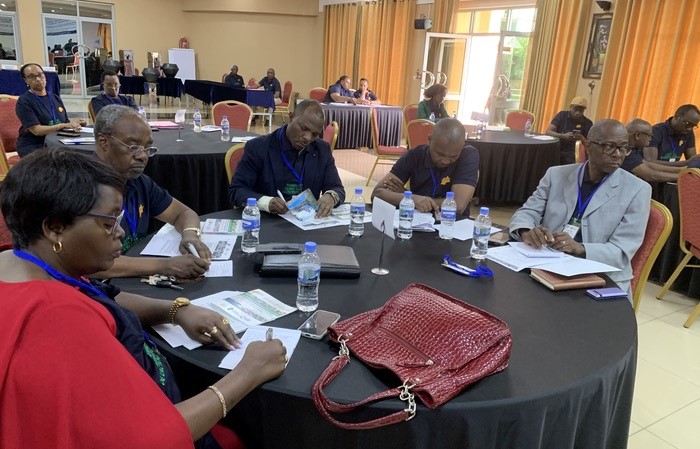
Ms. Fortunée Twiyubahe, one of the project’s implementing partners, recalls that the project requested 2 hectares in the Munini sector of the Nyaruguru district for the marginalized community. The request was granted. The 2 hectares were used to cultivate cassava and plums. The FACE project provided hoes and watering cans. It also raised awareness among the marginalized community about stealing from neighboring villages. Previously, when a marginalized person stole, the victimized villages would launch a mass attack, and members of the marginalized community would be indiscriminately beaten, suffering head and eye injuries. It was necessary to find income-generating activities to provide food for the thieves.
Today, three men are responsible for the security of the marginalized community spread across 22 houses in the village. Before the FACE Project, marginalized people were not employed on the tea plantations. But thanks to the FACE Project’s intervention, they will have jobs on the Nshili tea plantations and in other hygiene-related activities at the train station.
“The marginalized community is no longer afraid or stigmatized. We no longer run away at the sight of local authorities. The FACE Project provided our cultural troupe with uniforms, as well as drums and rattles (amayugi). We are a competitive and valued cultural troupe, invited to various events in the area to perform at celebrations. We have regained our dignity thanks to the FACE Project,” testifies Mutabazi, who is participating in the FACE Project achievements workshop. (End)